
In recent years, canned fish shops have become one of Porto’s most photographed sights. Colorful tins, retro design, and carefully staged storefronts attract passersby — but they also raise a recurring question: are we looking at genuine gastronomic tradition or simply a product created for the tourist gaze?
A tradition over a century old
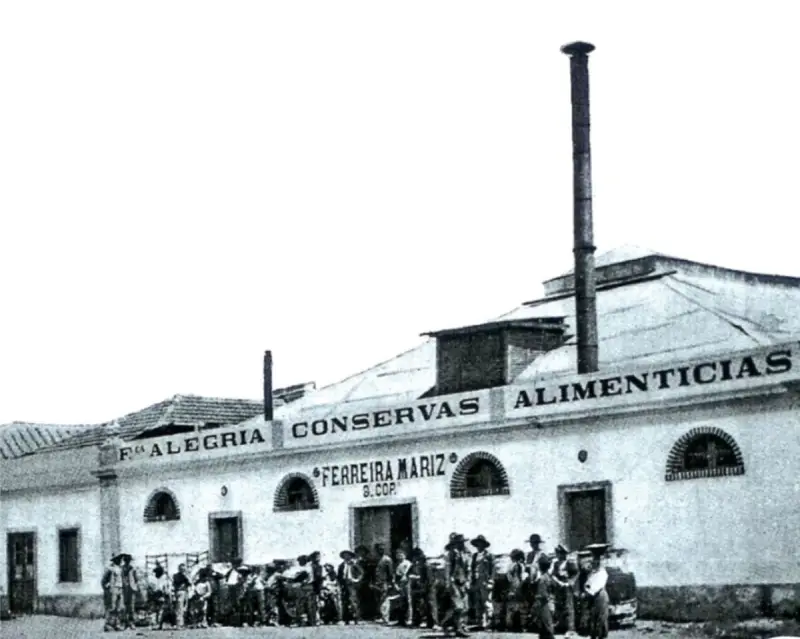
Portugal’s canning industry is far from recent or tourism-driven in its origins. The first factory opened in 1853, and the sector quickly expanded, supplying international markets and playing an important role during key moments in European history. Long before that, coastal communities were already preserving fish in salt, taking advantage of the Atlantic’s abundance of sardines.
Today, canned fish remains deeply rooted in Portuguese culture — simple, practical, flavorful, and present across generations.
Design is not a synonym for quality — nor for its absence
The most scenic shops in the historic center mostly sell premium canned fish, with illustrated packaging, special editions, and higher prices. But careful design and “Instagrammable” aesthetics are not, in themselves, indicators of higher or lower quality.
What is certain is that this design comes at a cost. Visual concept, distinctive packaging, and the retail experience are part of the product and are reflected in the final price.
If the goal is to take home something visually striking, aesthetically different, and conceived as a travel memory or a gift, that price difference can make perfect sense.
Authenticity also lives in simplicity
On the other hand, the authenticity of Portuguese canned fish has never depended on the look of the tin. Historic brands widely consumed by locals — such as Minerva, among many others — continue to offer:
- national production
- traditional methods
- high-quality fish
- affordable prices
.
Without a focus on tourist-oriented design, yet with everything that defines the true canning tradition.
For those looking for a genuine product, faithful to local consumption and with an excellent price-quality ratio, these cans remain a solid and authentic choice.
So, are they tourist traps?
The answer is more balanced than it seems.
- Tourist-oriented design does not guarantee higher quality — nor does it mean lower quality.
- It represents a different positioning, and that positioning has a price.
- Authenticity and flavor are still available in simpler and more affordable versions.
.
In the end, it is not about choosing between “touristic” and “traditional”. It is about understanding what you are looking for: a visually striking object to remember your trip or a can that reflects its purest form, just as it has always been part of the Portuguese table.